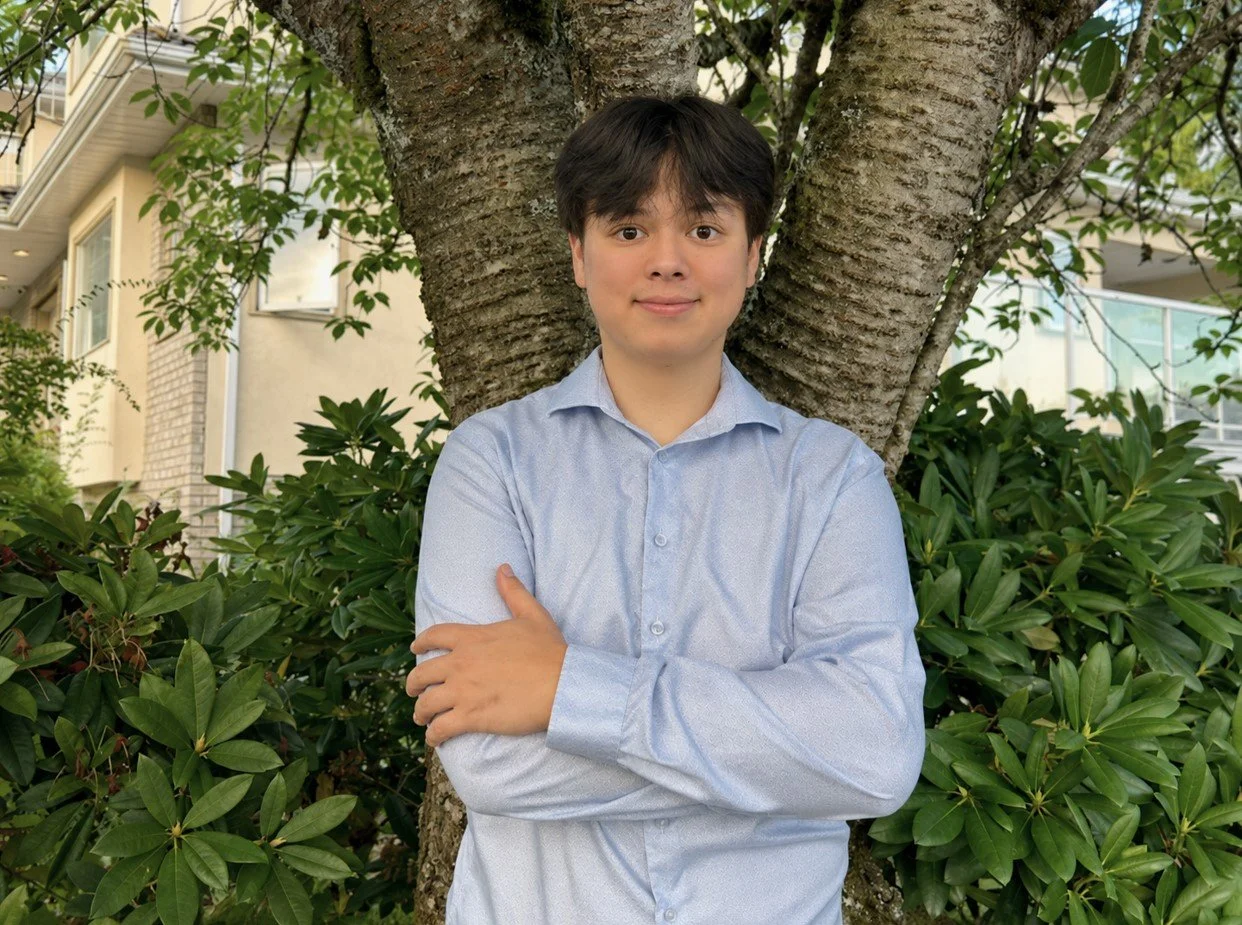
About Jordan
I'm Jordan Beatty, a therapist in Burnaby, BC in the qualification process to become an registered clinical counsellor with the BCACC. I work under the clinical supervision of Dr. Christopher Brown, RCC.
I work with youth and adults through anxiety, depression, life transitions, stress, relationship difficulties, and periods that have simply become harder to manage than they used to be.
I see clients from age 14 upward, in person in Burnaby and virtually across British Columbia, in English and conversational Mandarin.
How I think change happens
Most people arrive already knowing what they want their life to look like. What they cannot see is what keeps getting in the way.
That is the part of the work I am interested in. I do not think therapy teaches people capacities they do not already have. We cannot teach someone how to love, but we can teach someone how to remove the barriers that are preventing them from loving. The same holds for most of what brings people to counselling: the capacity is usually intact and something is sitting in front of it.
So my starting point is that you already hold the strength this will take. My work is to help you find what is blocking it, understand where it came from, and clear it. Some of those barriers are recent. Others are lessons learned early, in circumstances that made sense at the time, which hardened into patterns that keep returning long after the circumstances changed. Understanding why something happened is different from judging that it happened, and I approach my clients with a neutral lens on purpose.
Why I became a therapist
I started out working with children and youth about ten years ago. I coached young athletes at a high performance level, where I found myself attending to their psychological battles as much as their physical ones, and then spent two years as a youth worker and social worker at a non-profit in the Lower Mainland, working with young people considered at risk.
What I saw there is the reason I changed careers. The system around those young people was dysfunctional. They received very little care, and what they did receive had no continuity: a new worker, a new file, a new beginning, over and over. Counselling could offer the one thing social work could not, which was staying with someone long enough for the work to hold. I wanted to be the part of the system that did not break.
Outside of clinical work, I have led fundraising efforts that have raised more than $10,000 for the Canadian Mental Health Association, the Aga Khan Foundation and BC Children's Hospital.
Training and how I work
I hold a Bachelor of Science in Behavioural Neuroscience and am completing a Master of Counselling at City University of Seattle.
My primary orientation is person-centred, which in practice means the direction of the work is yours to set and my job is to follow it accurately rather than steer it. Alongside that, I draw on:
Dialectical Behaviour Therapy (DBT), a structured approach to managing intense emotion and the behaviour that follows it
Emotion Focused Therapy (EFT), which treats feelings as information to work with rather than symptoms to get rid of
Cognitive Behavioural Therapy (CBT), which looks at the link between how we think, how we feel and what we do
Psychodynamic work, which traces present difficulty back to earlier relationships and patterns
Mindfulness and grounding practices, useful when distress arrives faster than thought
Solution-focused therapy, for periods when the priority is a decision in front of you rather than the history behind it
Which of these a session draws on depends on where you are in the process. A first session is usually about safety and getting the story out. Later sessions might be practical and solution-oriented, or might go into what sits underneath. I am interested in further training in EMDR and in deepening my DBT practice.
Who I work with
I work with young people from age 14 and with adults, individually and as couples. Alongside the everyday concerns most people come in with, three areas are where I have particular depth.
Youth and young adults. Ten years of it, in coaching, outreach and counselling, with teenagers and with people in their twenties. I also work with parents who are unsure whether their teenager needs counselling at all.
Trauma. Two years of trauma work at the non-profit, with training provided there, and a capstone research project on psychological rehabilitation after traumatic injury and the barriers to recovery.
Addiction and substance use in young adults. Also from the non-profit years, alongside work on motivation and the question of what makes change feel possible. Substance use is where the barriers framing does the most work, because what is in the way is rarely the wanting.
Booking
I offer every new client a free 20-minute consultation, by phone or video, before anything is booked. It exists so you can hear how I work and decide whether it suits you, with no obligation either way.
Sessions run 50 or 80 minutes, in person in Burnaby or online anywhere in British Columbia, in English or conversational Mandarin.